ForceofPhil Miracles Primer
I received a lot of positive feedback on the article covering my Win-a-Dual Top 4 finish, as well as inquiries about why I included certain cards in my Miracles list. Though it's only one solid finish and the current iteration of the build certainly needs to prove itself again in the near future, I thought it worthwhile to do a quick primer for the staple cards that comprise the fundamental Miracles shell.
First, here's my current list as of this article's publication:
ForceofPhil's Miracles
DECKLIST_START
Instants
4 {Brainstorm} [u]
4 {Swords to Plowshares} [w]
4 {Erode} [w]
2 {March of Otherworldly Light} [w]
4 {Predict} [1][u]
1 {Thwart} [2][u][u]
4 {Force of Will} [3][u][u]
Sorceries
4 {Ponder} [u]
3 {Flow State} [1][u]
4 {Lorien Revealed} [3][u][u]
1 {Witness the Future} [2][u]
1 {Entreat the Angels} [x][x][w][w][w]
1 {Terminus} [4][w][w]
Enchantments
4 {Counterbalance} [u][u]
Planeswalkers
1 {Jace, The Mind Sculptor} [2][u][u]
Lands
4 {Flooded Strand}
4 {Tundra}
4 {Mystic Sanctuary}
3 {Island}
1 {Plains}
1 {Misty Rainforest}
1 {Meticulous Archive}
Sideboard
4 {Consign to Memory} [u]
3 {Vendilion Clique} [1][u][u]
3 {Hydroblast} [u]
1 {Surgical Extraction} [bp]
1 {Thraben Charm} [1][w]
1 {Disenchant} [1][w]
1 {Terminus} [4][w][w]
1 {Karakas}
DECKLIST_END
Define Miracles
Some might look at a deck with only three Miracle cards across the 75 and ask, "How is this a Miracles deck?" Miracles suggests a style of play that inspires my corresponding card choices to support it.
Most control decks include card advantage that directly aims to control the board, the stack, or players' hands. Miracles as an archetype is unique in that it aims to control the game by manipulating the top of its library.
As a result, many cards that would seem strong in any control shell do not pan out as well in practice in Miracles and vice versa.
The only other archetype in competitive Magic that cares about manipulating the top of the library as a means to control the game is Lantern Control.
{Miracle Worker} by Ron Spencer
The Miracles Shell
If you listen/watch the Eternal Durdles podcast, you've probably heard us discuss ABC Deckbuilding: choose a Legacy-power-level thing to do and scaffold the deck such that if one axis is cut, the structure holds.
Classic {Sensei's Divining Top} Miracles of old believed {Terminus} and/or {Counterbalance} as the Legacy-power-level things to do, and thus interchanged them depending on the matchup.
For example, we primarily want {Terminus}, therefore we want {Sensei's Divining Top}, therefore we want {Counterbalance}. You can swap {Terminus} and {Counterbalance} depending on the meta to inform mulligan choices, but the structure remains sound.
{Sensei's Divining Top} by Michael Sutfin
When {Sensei's Divining Top} was banned in April 2017, Miracles became standard, sub-par [u][w] Control. Players tried to recreate the Miracles they knew, but it never felt strong enough because they were no longer building Miracles; they were building [u][w] control.
While not nearly as powerful, the closest functional replacement of what {Sensei's Divining Top} did structurally for Miracles since its banning is {Mystic Sanctuary}, which is why my list always includes four copies.
{Terminus} by James Paick
{Terminus}
{Terminus} remains a fine card as a means to clear the board from an otherwise unrecoverable position. Aside from those huge swings, wrath effects that don't sweep up other permanents aren't the build-arounds they once were.
Threats are too varied in the answers they require and too snowbally in their card advantage. Any control player would happily {Terminus} a {Tamiyo, Inquisitive Student} or {Urza's Saga} constructs, but just by reading that, you likely felt the ick of knowing how risky or anemic it is.
An instant-speed {Terminus} can never fully clear an {Orcish Bowmaster}. Since both the Miracle and {Orcish Bowmaster} trigger occur simultaneously, the resolution of the stack is non-active player first; {Terminus} clears the {Orcish Bowmaster} and the Orc Army, and then the {Orcish Bowmaster} trigger resolves, creating a new Orc Army.
Additionally, {Sensei's Divining Top} made {Terminus} a powerhouse by not only floating it atop the library but also as a [0]-mana, instant-speed way to draw a card. {Mystic Sanctuary} doesn't have that function, so another card needs to be included to supplement it, which takes up space.

{Deduce} by Quintin Gleim
Players who follow my testing might see me use {Deduce} often, which, although not a Legacy-playable card, serves the purpose of consistently supplying an instant-speed card draw following a {Mystic Sanctuary}. {Mystic Sanctuary} and {Deduce} attempts to build a {Sensei's Divining Top}.
All of that infrastructure to support {Terminus} can feel Sisyphean when the payoff of said {Terminus} isn't a guaranteed safe board. Hence, the heavy shift toward supporting {Counterbalance} as the Legacy-power-level thing to do. {Counterbalance} doesn't ask for the card draw clause. Rather, it asks for more instant-speed ways to manipulate the top of the library and a deep understanding of a metagame to optimize mana value alignment.
{Thwart} by Christopher Moeller
{Thwart}
{Thwart} is likely the meme'iest card in my list. It feels like a signature at this point. I don't play it for the meme, though. I play it because it offers the foundational structure I desire to pilot Miracles.
A — {Counterbalance}
B — {Mystic Sanctuary}
C — {Thwart}
{Thwart} plus a pair of {Mystic Sanctuary} theoretically provides infinite copies of any instant and sorcery in your deck. The first {Mystic Sanctuary} recurs the desired card, the second recurs {Thwart}, rinse and repeat forever.
The necessity for the second {Mystic Sanctuary} recursion is why single-land bounce effects like {Daze}, {Deprive}, {Tragic Lesson}, etc. don't provide the same inevitability. In those examples, the first {Mystic Sanctuary} must always target the spell that can pick it back up.
Additionally, in any late game where you have access to {Thwart} plus a pair of {Mystic Sanctuary}, you can deterministically prevent decking. Since you can also cast the first rebought spell with {Thwart} by holding priority, you can forever put a card on top of your library.

{Witness the Future} by Anato Finnstark
{Witness the Future}
This is not a staple by any means, though it consistently earns its place in my list. I would much prefer it if it were an instant speed spell that also offered some additional effect not currently available to the deck at a competitive rate (e.g., life gain).
It is, however, an extension of {Thwart} and {Mystic Sanctuary} in that all card types that {Mystic Sanctuary} can't recur, {Witness the Future} can.
The Rest of the Deck
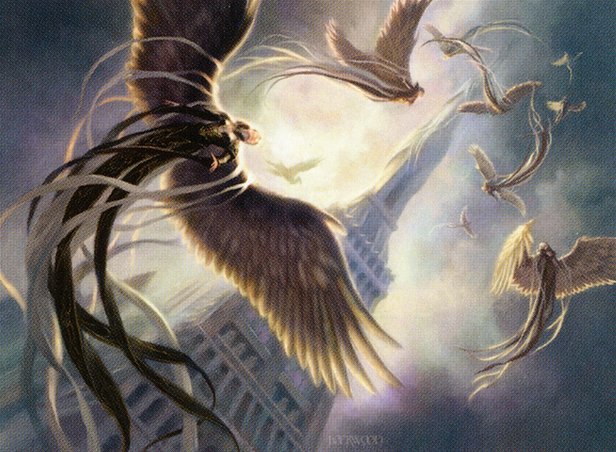
{Entreat the Angels} by Todd Lockwood
[w] Cards
{Swords to Plowshares}, {Erode}, {Terminus}, {March of Otherworldly Light}, {Unexpectedly Absent}, etc. are all means to survive. Non-control decks see these cards as removal; control decks should view them as payoffs. Control's goal is staying alive, and any card that ensures that should be protected similarly to how aggro's is killing the opponent.
A tempo player will protect {Dragon's Rage Channeler} because they see it as a means to achieve their goal of killing the opponent. A control player will protect their {Swords to Plowshares} because they see it as a means to achieve their goal of staying alive.
{Entreat the Angels} is a three-drop for {Counterbalance} and the most over-the-top spell that can be recurred with {Mystic Sanctuary} in a [u][w] deck. Despite my love for the card, I agree it is no longer at a Legacy power level and could be any other win condition.

{Predict} by Rebecca Guay
{Predict}
{Predict} is certainly underpowered by the current Legacy card advantage options. The reason it maintains its spot in my list is that it blends well with the shell's current structure: instant-speed card draw that manipulates the top of the library between {Counterbalance} triggers.
{Flow State} is the new hotness, excellent on rate, and doesn't care about {Orcish Bowmaster}, but it's much less elegant than {Predict} in Miracles. It doesn't have any synergy with the structure; its inclusion is due to power level. As new cards are released, {Flow State} and cards like it that are unsupportive of the main structure will be the first cuts.
I view {Counterbalance}, {Predict}, and any other form of card advantage that supports {Counterbalance} as my threats. Since my goal as a control pilot is to survive, I will protect and/or fight over them if I believe they would better ensure my survival than keeping the other cards (i.e., if converting the {Predict} is more valuable than keeping {Force of Will} in hand, I'll fight over the {Predict}).
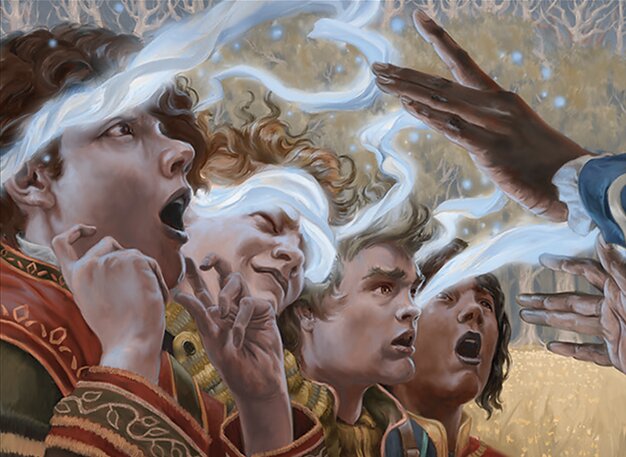
{Lorien Revealed} by Randy Gallegos
{Lorien Revealed}
{Lorien Revealed} provides additional [u] cards for {Force of Will} and {Force of Negation}, additional five-drops for {Counterbalance}, which are beneficial against matchups where {Force of Will} is boarded out, and can manipulate the top of the library at instant speed.
I've come to enjoy the timing nuances that {Lorien Revealed} provides, since it can tutor {Mystic Sanctuary} or {Meticulous Archive}, both of which make {Predict} live during development.
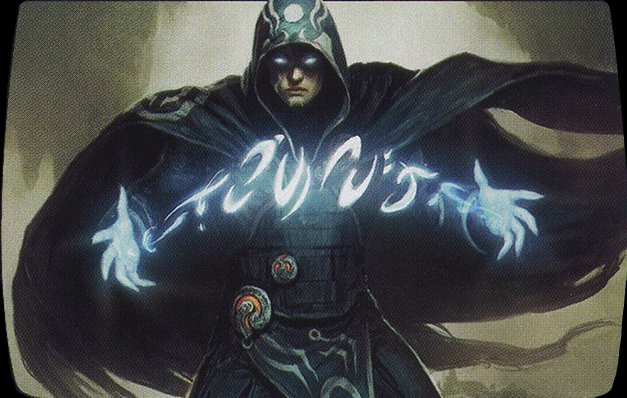
{Jace, The Mind Sculptor} by Jason Chan
{Jace, The Mind Sculptor}
Better than all. {Jace, The Mind Sculptor} functions alongside {Counterbalance} and is castable without [w] mana. In this build, it's another four-drop. {Jace, The Mind Sculptor} isn't a requirement; I consider it a sort of fifth {Predict}. I've always been happy to play one; I've felt punished playing more than that.
What it do.
Submit Your Article To Eternal Durdles!
If you enjoyed this primer, please support this website via our Patreon.
Subscribe to Eternal Durdles on YouTube!
Subscribe to Common Sense: Sorcery podcast on YouTube!
Featured image: {Mystic Sanctuary} by Randy Vargas