

I remember Legacy before War of the Spark; before Planeswalkers.
At our local Legacy league in the spring of 2019, I distinctly remember sitting across from my opponent, who remains well-regarded in our community for helping organize events and for his results at Star City Games tournaments. That day, he played Miracles; I was on Goblins, which had graduated from my “budget deck” to “pet deck.” After grinding Matron-into-Ringleader versus Brainstorm-into-Terminus, I emerged victorious.

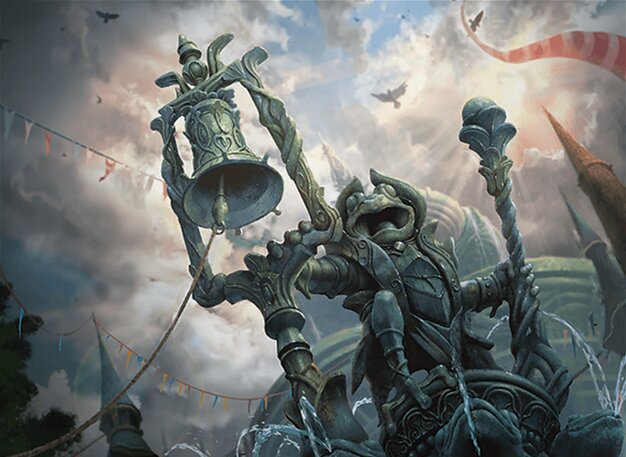
Goblin Ringleader by Mark Romanoski
The games were interesting. We traded resources, accrued card advantage, and fought on the stack. I don’t remember who won the die roll because it didn’t determine the match's outcome before it started. Legacy between the Deathrite Shaman and Gitaxian Probe ban and the release of War of the Spark was a fulfilling, intellectually stimulating, and fun experience, win or lose. It was peak Legacy.
I’ve been chasing that format ever since.
Unfortunately, things changed: War of the Spark was released, F.I.R.E design was introduced, and Commander became the primary design focus. Broken planeswalkers, combo pieces, mechanics, and tempo threats were introduced, resulting in more frequent ban-and-restricted (B&R) announcements due to their unhealthy impact. We were subjected to Un-cards, which have also since needed a ban to reconcile.
In 2025, conversations in the Legacy community are a constant drumbeat of ban discussions because the B&R announcements don’t keep up with the release of cards that break or warp Legacy. We discuss which cards should go next time under the shadow of whatever is forthcoming.
A “healthy” Legacy feels out of reach. While one could argue for two or three cards to be banned in March, there are another dozen-plus widely accepted cards that should have never been printed — we’re stuck with them.
While I’m still emotionally and financially heavily invested in Legacy, my relationship with it is changing. Power creep from Commander and Modern Horizons products and the creative dissonance of Universes Beyond have disrupted the nostalgia that first drew me to the format.
The dominance of Tempo, Stompy, and Combo discourages experimenting with new strategies or innovating old ones. I’m reluctant to attend competitive events partly because of the boring, frustrating, or miserable play patterns.
When someone from my local group approached me about trying Premodern, the offer piqued my interest. I followed the format at a distance but never had much chance to play in paper. I’ve realized, however, that this community-driven format offers what I’ve missed in Legacy. It might do so for you, too.
A Total Nostalgia Trip
I missed the initial Premodern window by about a year, having bought my first preconstructed deck during Fifth Dawn. However, I remember borrowing my friends’ Beasts, Clerics, and Slivers decks at school, playing unwieldy multiplayer games in the lunchroom or on the band room floor with only about a 75% understanding of the rules. I was instantly hooked by the immersive lore, art, and intricate and rewarding gameplay as I understood it at the time.
From there, I followed a reasonably typical progression: buying lots of preconstructed decks followed by a few failed budget attempts to play Standard. Extended, while financially and competitively out of my reach, was really appealing with interesting decks like Astral Slide, Psychatog, and, yes, Goblins. I took a break during college, eventually buying into Legacy once graduated and with disposable income.
While decks were different, Legacy delivered on the same feelings I had when looking at those Extended lists nearly a decade prior. Old, powerful cards like Force of Will, Wasteland, and Lion’s Eye Diamond defined a format that showcased almost all the cards from Magic’s history. Legacy was a format where I could play those battered cards with strange art and rules text like I had in middle and high school.

Lion's Eye Diamond by Margaret Organ-Kean
I will give Wizards of the Coast (WotC) credit: reprinting modern cards with the old card frames and including references to iconic cards in Modern Horizons sets, such as the ill-fated Psychic Frog, have been fun nods to Magic’s past. On the other hand, sitting across from Captain America is jarring at best.
Nostalgia is tricky to evaluate because it’s subjective. Premodern appeals to me because it captures an era of Magic’s history that’s special and preserves it — legendary creatures are special; artifacts are unique; enchantments do weird things — the color pie matters. Goblins, Elves, Rebels, Clerics, Slivers, and Squirrels are without clown cars, cowboy hats, or corporate interlopers.
Premodern is Magic: The Gathering as I learned it; no more, no less. As a closed format, that will never change.
Bring Your Own Brew
A recent talking point among Legacy content creators is the realization that Control as a macro-archetype might not exist anymore. A cursory glance at MTGTop8.com at the time of this article’s publication shows decks classified as Control are cusping on single-digit percentage of metagame share. The highest metagame share for a Control deck on MTGGoldfish.com is BUG Beanstalk at sub-2%; the 15th deck down the list.
Creature decks — outside of Tempo and Stompy shells — have become the realm of specialists. Decks like Death and Taxes, Maverick, Elves, Merfolk, and Goblins face tremendous uphill battles without a combo finish.
Referencing MTGTop8, approximately 75% of the metagame is Tempo, Stompy, or Combo. At least the top 10 decks on MTGGoldfish.com fit into one of these categories.
One might argue there is diversity within these macro-archetypes since you can play Delver of Secrets with Dragon’s Rage Channeler or Orcish Bowmasters. You can play Ancient Tomb with Fable of the Mirror-Breaker or Kozilek’s Command. There are at least three different ways to win with Thassa’s Oracle. That’s not diversity in a format with more than 20,000 legal cards!

Dragon's Rage Channeler by Martina Fačková
The data for Premodern shows a split of approximately 33% metagame share each for Aggro, Control, and Combo. There are creature-based decks (like Goblins!), big and small, and control decks with various color combinations. There are several different flavors of Combo — spell-based, graveyard-based, enchantment or artifact-based, and A+B combo decks.
While there is a ban list, the format has shown capable of course-correcting its metagame. The prominence of certain cards and decks rises and falls, as you would expect from a metagame ebbing and flowing. No new design mistakes will enter the format.
That’s not to say the Premodern metagame doesn’t have flaws. The community has ongoing ban conversations about cards like Parallax Tide, Phyrexian Dreadnought, and Oath of Druids. Black seems to be lacking in the format overall, at least when this article first went live. Some Premodern personalities might not like where the format is, which says something about the state of Legacy if Premodern remains a more attractive option.
Premodern’s diversity remains impressive for a fixed, eternal, non-rotating format. The phrase “brewer’s paradise” is oft over-used, but there’s still room to discover cards and interactions long forgotten in Premodern’s future.
Apart from some Reserved List cards, many Premodern decks are relatively affordable. For example, UG Madness sans Survival of the Fittest costs less than some Pauper decks. Alpha/Beta/Unlimited/Revised (ABUR) dual lands aren’t legal nor are chase cards from supplemental sets nor mechanically unique Secret Lair products.
Elegant Gameplay for a More Civilized Age
Every format has its unique identity regarding gameplay patterns. Commander is “battlecruiser” Magic — players regularly posting pictures online of convoluted board states or impossibly large creatures. Vintage is defined by the Power 9 and other similarly powerful cards restricted to single copies per deck. What initially attracted me to Legacy was the combination of powerful interactions, strategic depth, and effective answers to opposing threats — the stack and the battlefield mattered.
It's been clear for a while that new threats in Legacy outpace the answers, resulting in games that feel lopsided. Snowballing threats and proactive strategies increase the importance of being on the play, which heightens the prevalence of Tempo and Stompy strategies. Cards like Daze and Ancient Tomb maximize winning the die roll and minimize the downside of losing it.
There are so many haymakers in Legacy that the number of meaningful turns in a game has decreased absent an immediate, specific answer. Decks often play past each other because the proactive strategies are the most powerful, viable options available.
I admit this is where my rudimentary understanding of Premodern betrays me most, as I haven’t logged nearly enough reps to confidently describe and critique its play patterns. However, looking at strategies and card selections of recent decklists, I see a format with many answers, even without Force of Will.
Aggressive threats are good but not great;