



Written by Zac Clark
When glossing over Gothic, I quested for how Eric’s Curiosa guides gameplay via new Avatars. The one card you’re guaranteed access to, which represents you in the Realm, is, arguably, your most crucial deckbuilding choice.
I keenly eyed each new Avatar as they were revealed during release week in early December 2025. My initial intrigue for Animist, however, was quashed.
Animist
You may cast magics in your hand as Spirits with power equal to their cost.
Casting magics as minions doesn’t generate the magics’ effects; it’s either magic or minion. I wrote off Animist and moved on.
Support Eternal Durdles on Patreon
Speculation vs. Realization
Not getting to wield the theoretical Spellbook full of minions with the most potent genesis effects in the game was an impossible hurdle of disappointment. “Why not make this Avatar great?” I thought. Damn. “What other Avatars are there?”
Phil (ForceofPhil), Harry from Moxfield, and I wax intellectual about Sorcery: Contested Realm (SCR) in our group chat. We spent an afternoon chatting about the new Gothic Avatars. I mentioned that Animist casting magics as Spirits doesn’t generate the magics’ effects. They were disappointed to.
After opening an Animist at a Gothic Sealed release party, visions danced in my mind’s eye during slumber’s darkness. I awoke before the sun, and sent a text:
I’m taking another look at Animist.
Animist’s actual test was if the value prop “magic or minion” could best Archimago, which I assumed would helm the best deck in Gothic’s early meta despite the new plethora of incidental cemetery hate.

Druid was nerfed, and, therefore, not a concern. There will likely be Aggro/Midrange decks to contend against; Shrink the Frog Battlemage/Interrogator as an early choice, but could Animist out-control the go-to control deck?
I built Animist, identifying new Gothic cards that enable slower strategies to accelerate early development — Landmass and Overflow — and seize control in the first few turns. I stress-tested my idea that cards desirable in the early game could remain potent threats in the mid- to late game.
The Animist Deck

Landmass and Overflow accelerate slower strategies into the mid- to late game, when their card quality should outmuscle the opponent. To do so reliably, you need a critical mass of the acceleration effect. Therein lies the detriment of Spells meant primarily for development: post-development, those spells are soft draws you hope to avoid. Animist solves that problem.
Animist drawing a late Landmass or Overflow is a 3-power Spirit for three mana, the respectable bottom of mid- to late-game playability, rather than a blank cantrip. Eight of 60 is about a 40% chance of opening with a Landmass or Overflow. Common Sense increases that percentage by spending turn two tutoring* for either ramp spell for turn three.

Though the math isn’t guaranteed, and Landmass and Overflow are restricted by their corresponding site types (land and water, respectively), the first issue control strategies face — surviving long enough wrath** the board — was ostensibly solved. Curving from three to five suggests Poison Nova and Earthquake on turn four, the critical turn against Aggro.
Previously, in Enchantress, I needed Gothic Tower, Lone Tower, or Dark Tower to convert a five-mana sweeper effect on turn four. If I can trade one card for two or three early, I can often reach turn six onward, when Animist’s ability will hum.
*”Tutor” is shorthand for effects that search the Spellbook, Atlas, or Collection.
**”Wrath” is shorthand for effects that remove cards from the Realm en masse.

Why No  ?
?
Despite some exceptions, I don’t believe is worth stretching into. The base is 

 . and are self-explanatory (Landmass and Overflow). provides Poison Nova, the gold standard for Control.
is my favorite element. Evasion and card draw are always appealing, but doesn’t provide the control I desire: two-for-ones. does.
No Instants
In Magic: The Gathering (MTG), there are instants, which are spells that can be cast on the opponent’s turn. The inherent strength of that timing is casting spells at the end of the opponent’s turn when the window of opportunity for response, and therefore, risk, is lowest.
In that play pattern, it’s more reasonable to ‘take a turn off,’ so to speak, in exchange for optionality. Do I want to remove their threat? Draw cards? Deploy my own threat? The options are broad.
Use Our Link To Buy Cards
As the name of the game suggests, casting spells in SCR, aside from a few outliers, is only on the active player’s turn. In that play pattern, wasting mana comes at a cost. If I take turn six off to play Grandmaster Wizard, my opponent can continue developing threats or position. SCR compels me to play Control in a way I’m not used to: tap-out control.
Tap-Out Control
Tap-out control is a style by which the pilot attempts to maximize their mana each turn to leverage higher power-level cards to overpower the opponent. I believe this is the best path to leverage Animist optionizing magics.
Animist’s magics are always relevant since they can always be a threat. When the Realm is stable, Animist can deploy supplementary magics as minions to apply pressure.

Turns six through nine are the critical turns against non-Aggro. Several magics can be cast as minions early to act as speed bumps or beaters. Deciding what to deploy when comes with practice and knowledge of opposing strategies in the meta, an ever-present pitfall of Control strategies.
Knowing when Landmass and Overflow’s effects aren’t as relevant as a 3-power Spirit is easier than intuiting if the opponent will Bury your Poison Nova Spirit before it can fight their 4-power minion or if your Infiltrate Spirit in an empty Realm will fail against their follow-up Daperyll Vampire. That intuition improves with experience.
The Inverse Is True
Return to Nature is always potent in this deck beyond being relevant cemetery disruption.
Early Returns to Nature are often more useful as 2-power Spirits. Inversely to how Landmass and Overflow are stronger as spells early and Spirits late, Return to Nature is often stronger as a Spirit early and a spell late. Common Sense bridges the gap — tutors for either ramp spell early or for the needed Ordinary spell recycled by Return to Nature late.
In addition to Root Spider and Kettletop Leprechaun, animated Return to Nature, Gift of the Frog, and Exorcism are fine-on-rate early-game minions that can offer breathing room against Aggro.

Animist is Awesome
Animist’s modality is an incredible asset. I have tested five new decks post-Gothic. Animist overperformed against Midrange, which had its own robust late-game plan of card advantage and threat recursion.
At parity in the late game, Animist always draws a threat while the opponent has to sift through cards meant for different parts of the game. Their early-game do-nothings matter not against your early-game-turned-3-power-or-better Spirits. They didn’t have time to cast card draw for answers against a steady, guaranteed stream of threats.
Stand-Out Cards
- Apply Alkahest
- A great universal answer to anything near my Animist. My opponent never consolidated their threats, but destroying several artifacts made it clear this is a gem.
- Call of the Sea
- I’m playing many sites, so Call of the Sea is often live, but it’s a 6-power minion when it’s not, and the opponent has to play around both.
- I’m playing many
- Garden of Eden
- I’m not playing much card draw.
- Return to Nature draws a card, which can be a site if Garden of Eden is in the Realm.
- Levels the playing field to better leverage Animist’s magics’ modality.
- Many decks can’t function without their staple draw spells like Grandmaster Wizard.
- Nerfs Sorcerer outright for zero mana.
- I’m not playing much card draw.
- Return to Nature & Common Sense
- Return to Nature disrupts Archimago at card parity; the first two Returns to Nature are disruption, and additional copies recycle the first two.
- Learn about the infinite game. It defines which Control strategy will best other Control strategies.
Animist Ahead
My Animist build is still in progress, but the foundation is sound. Animist went from a write-off to my ride-or-die. My previous Avatar, Enchantress, didn’t hold up in my testing, though I’m confident it’s still strong.
If you want to share your thoughts on Animist or any of the Gothic avatars you’re brewing around:
Submit Your Article To Eternal Durdles!
Want to write for EternalDurdles.com? DM @ForceofPhil on Discord, Twitter, or BlueSky.
Subscribe to Common Sense: Sorcery podcast on YouTube!
Subscribe to Eternal Durdles on YouTube!
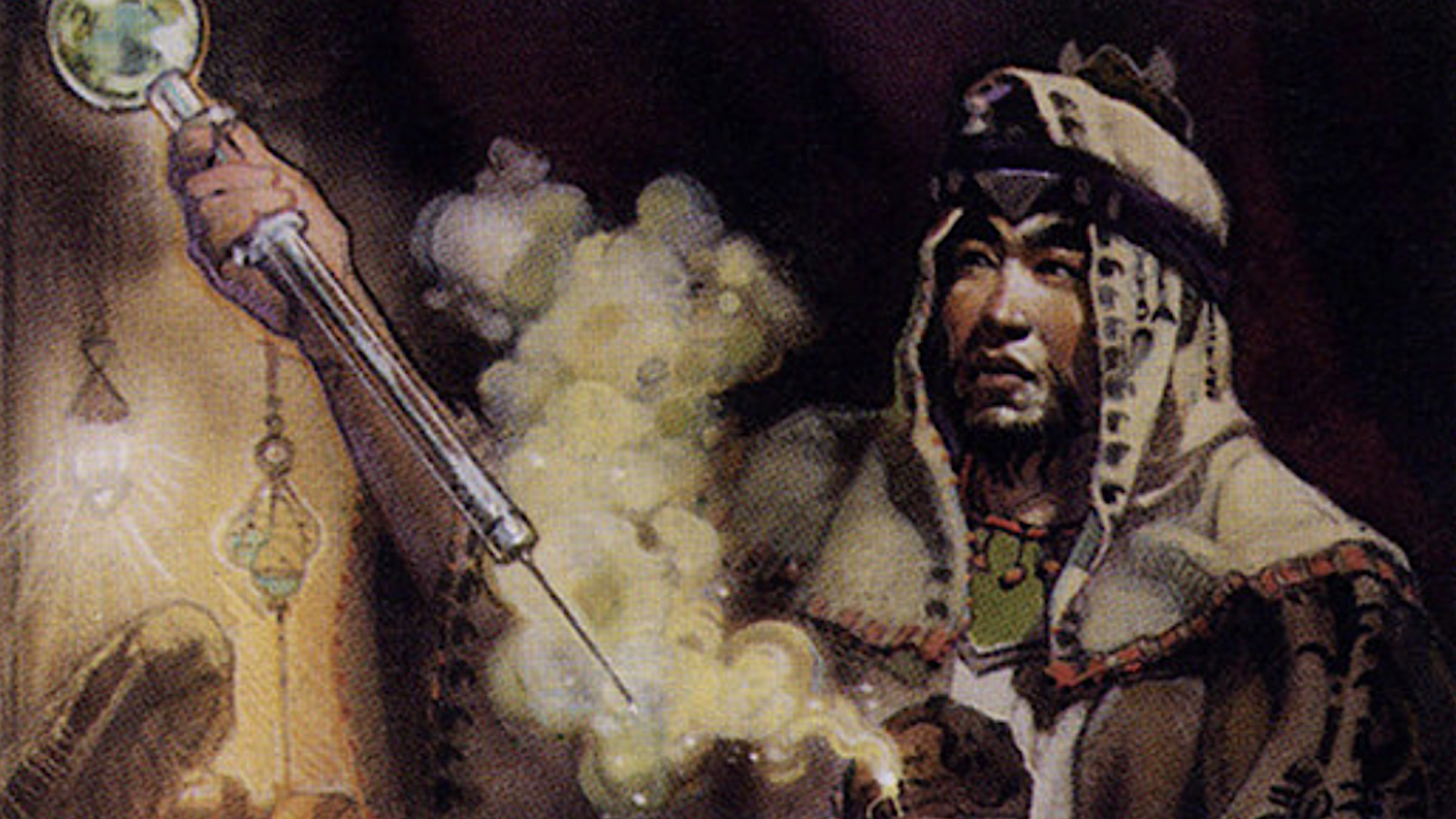
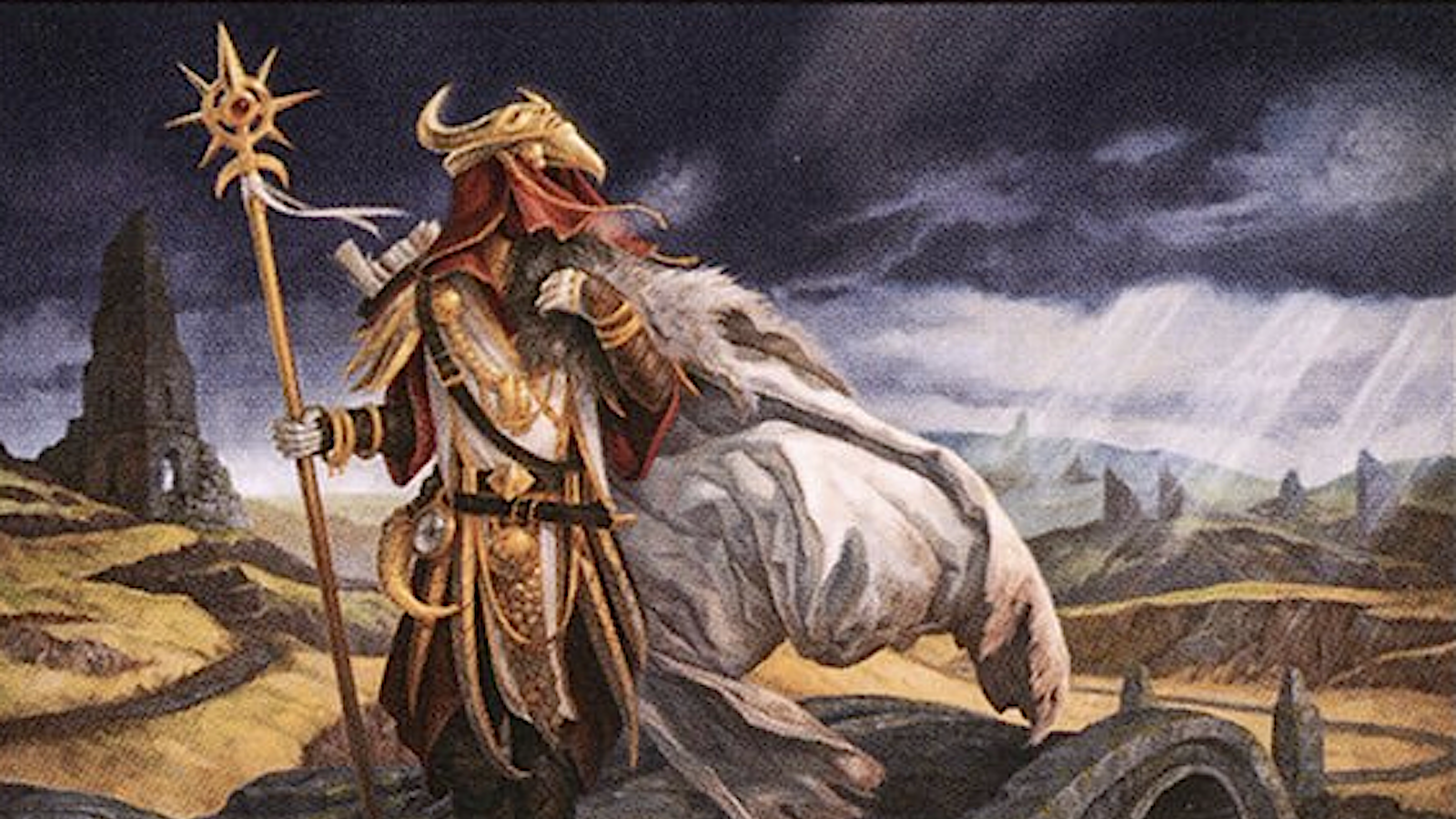
Featured image: Animist by Margaret Organ-Kean














Leave a Reply